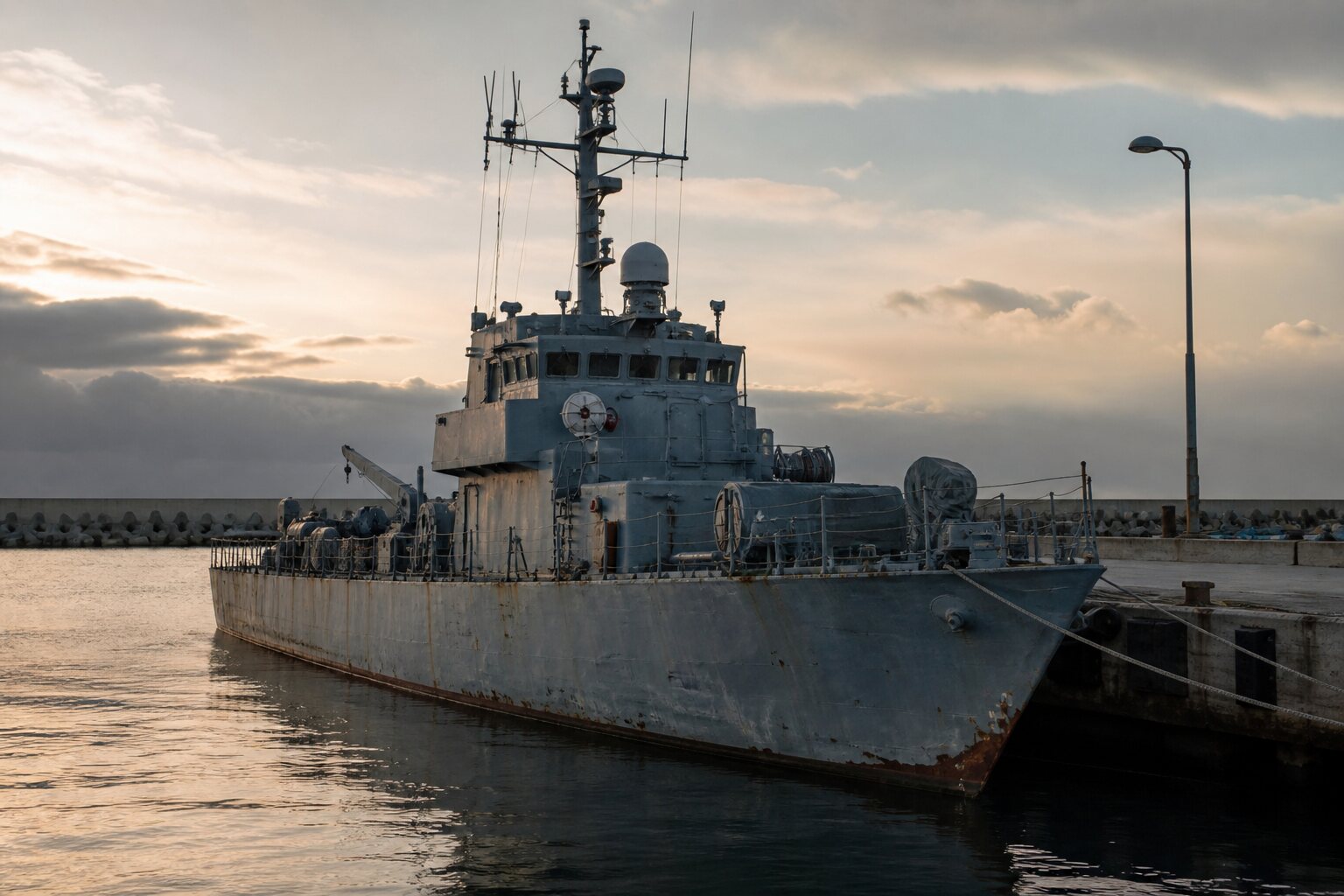
Late service is not an epilogue
A ship’s last documented period can reveal changes in assignment, readiness, classification or disposition. It belongs in the same chronology as construction and commissioning, not as a detached photo caption.
Date the image before naming the event
A photograph described as 1970-era may narrow the period without proving the exact day or location. Keep the supplied label visible and look for a catalog record, log or official summary that can carry a stronger claim.
Disposition closes one route and opens another
A final status can point toward inactive ship histories, registers and museum collections. The record may end without answering every personal question, but a clean endpoint is better than a dramatic one that is not supported.
Source note. This page separates documented history, archival observation and editorial explanation. Where a source does not establish a detail, the detail is left open.