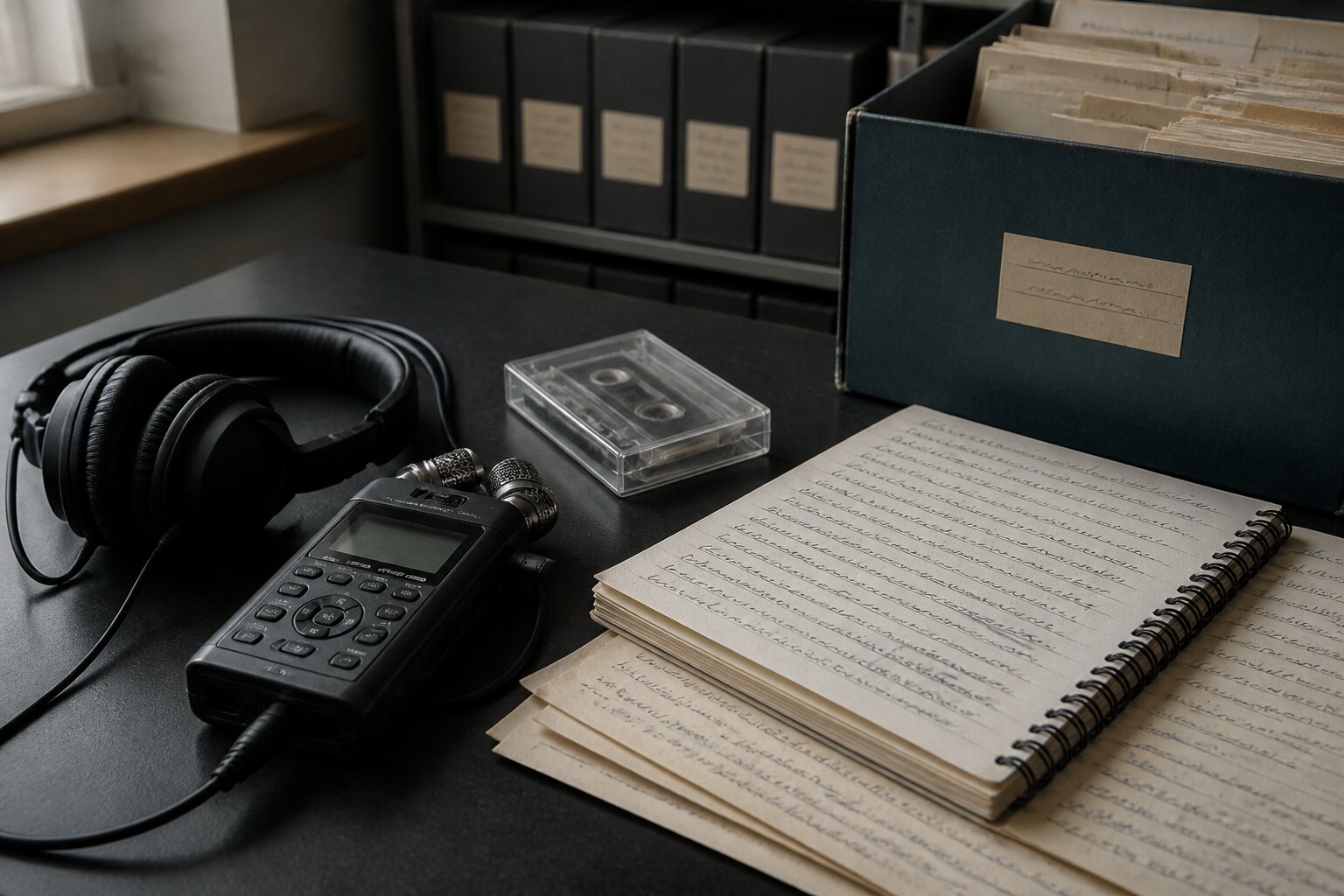
Ask what the recording can answer
Oral history is especially strong for perception, meaning, routine and change as remembered by a participant. It may be weaker for exact dates, complete rosters or events the speaker did not directly witness.
Build a provenance note
Record the speaker, interviewer, date, medium, original owner and permission status. A short provenance note protects the person and tells future readers why the account is being used.
Make corroboration visible
Compare the account with logs, muster rolls, photographs or command histories. Agreement can strengthen a claim, but disagreement can also be historically meaningful when it is described rather than hidden.
Source note. This page separates documented history, archival observation and editorial explanation. Where a source does not establish a detail, the detail is left open.